


Once, Queens, an ethnically diverse borough of New York, sought a visual language that could be understood by any audience. This role was filled by Queens Theatre, the main performing arts venue in Queens, which produces plays in addition to world-class dance, music and comedy shows. Find out more at queens-trend.
UNIQUE LOCATION
The Theaterama cinema was reconstructed as Queens Theatre in 1989 and officially opened in 1993. It is one of three structures that comprised the New York State Pavilion during the 1964 World’s Fair in Flushing Meadows-Corona Park. The International World’s Fair serves as both a symbol of industrialization and an open platform for countries to demonstrate their technical and technological achievement. Flushing Meadows-Corona Park was built particularly for the 1939 Fair, and another one was held here in 1964.
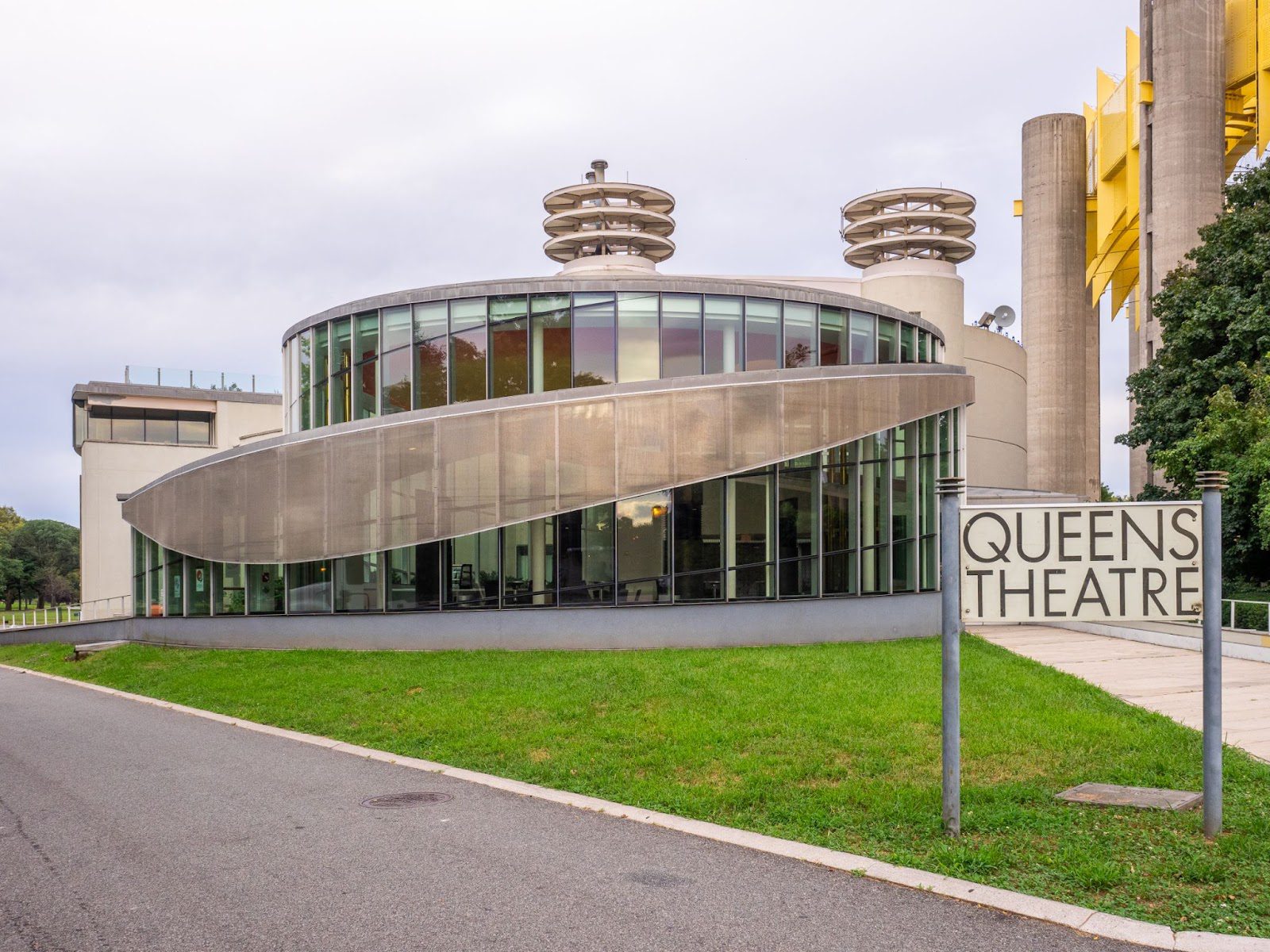
The New York State Pavilion was designed by Philip Johnson. The structure features triple observation decks, a restaurant and lounge area, as well as the open-air Tent of Tomorrow located near it. This is a true modernist masterpiece. During the exhibition, the Theaterama screened a panoramic film about the state of New York. The cinema’s front was decorated with large-scale original poparts by some of the most famous artists of the time, including Andy Warhol, Roy Lichtenstein, Robert Rauschenberg and Ellsworth Kelly.
When the exhibition ended, the pavilion was one of the few structures saved from demolition by individuals who cared. The three-dimensional cinema was turned into a multi-purpose theater in the 1970s, which required the installation of a stage, public restrooms, a lobby, dressing rooms and other amenities.
In 1972, the first non-profit professional theater in Queens, Queens Playhouse, was opened here. The debut production was one of the most famous plays by Irish playwright, Bernard Shaw, “Pygmalion.” The play’s innovative and witty approach to important social issues has made it popular in many countries.
In 1974, the theater experienced financial difficulties and closed in 1985. However, a $4 million project allowed for the conversion of the space into a 476-seat public theater, which opened in 1993. Before the opening, some had to be done, including improving the acoustics, adding a public elevator, installing additional lighting, redoing the facades, strengthening the original dome and adding a second roof to block out noise from the nearby airport. Initially, the theater was known as Queens Theatre in Park.
In 2008-2010, the structure was expanded to include a reception hall for 600 people. In 2009, Queens Theatre was added to the National Register of Historic Places in recognition of its importance as part of the New York State Pavilion during the World’s Fair.
DIVERSE PROGRAM
In addition to productions, Queens Theatre hosts cabarets, concerts and film festivals. It provides a wide range of drama, dance, musical and comedy performances, as well as family events. The programs represent the diversity of the community and are targeted at all segments of the population.
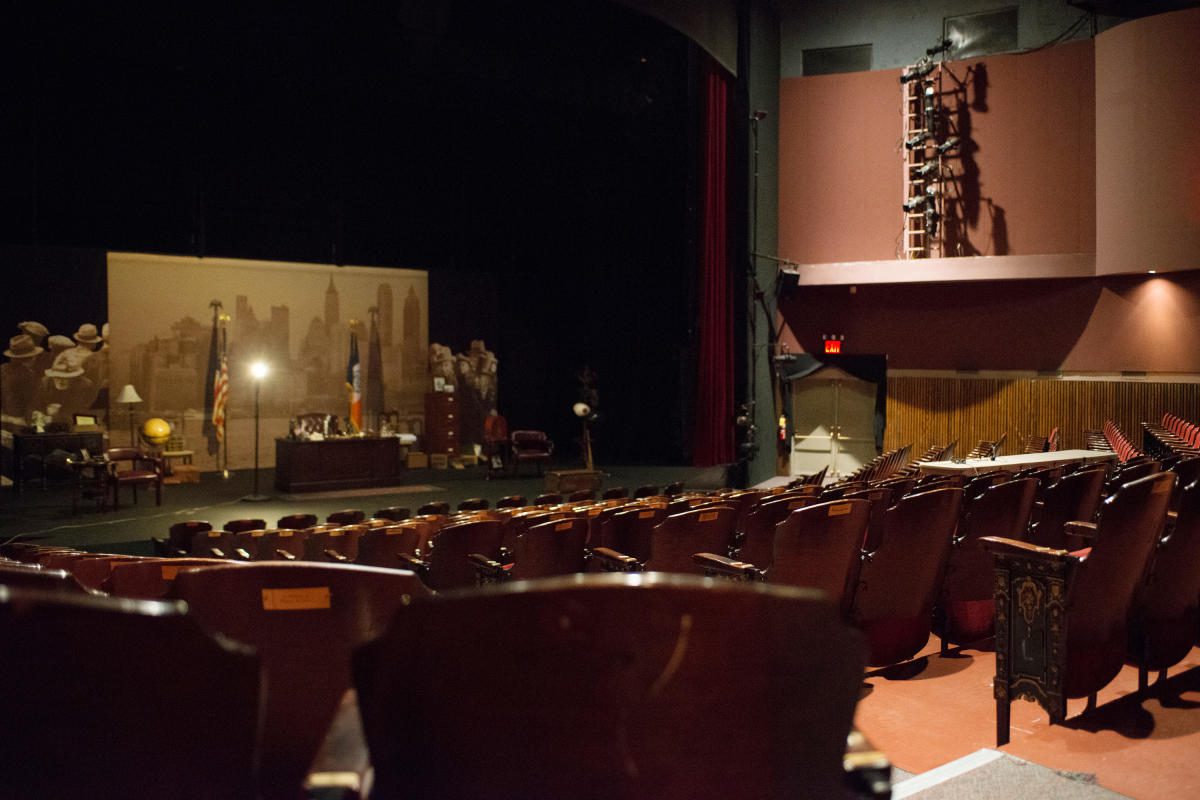
It is one of the few performing arts centers in the borough that actively produces new works through its play development programs. Queens Theatre has staged many plays by playwrights like Heather Raffo, Lauren Yee, Rajiv Joseph, Kristoffer Diaz and Caridad Svich.
In 2020, Queens Theatre presented the play “Chicken & Biscuits” by Douglas Lyons. A year later, it premiered on Broadway. This was the first time that Queens Theatre outperformed Broadway theaters.
The mission of Queens Theatre is to provide high-quality performing arts that are economically and geographically accessible to millions of residents of Queens, the most ethnically diverse borough in the country. For example, from 1996 to 1997, 90,000 people attended Queens Theatre. More than 300 theater, music and dance performances, as well as multiple master classes, film screenings and festivals, took place that season. For the benefit of Latin Americans, the theater’s management organized a Latin American festival.
In April 2021, the experimental cinema project “I See You And You See Me” premiered at Queens Theatre. This film-theater combination portrayed the lives of Queens people during the coronavirus pandemic.
Since its founding, Queens Theatre has been funded by a generous community of investors. Every year, a significant part of the theater’s budget is made up of donations from hundreds of people and even entire families. Many local public and private businesses participate in charity campaigns that allow employees to make contributions by deducting certain amounts from their salaries. Gifts, grants and simply cash donations make it possible to ensure long-term financial stability for the institution, expand the art program and renovate the building.
THREE ACCESSIBLE HALLS
Queens Theatre is a dynamic performing arts center with three exhibition halls. The main stage can accommodate 472 people, while the studio theater can seat 99. There is also a cozy cabaret and cocktail bar.
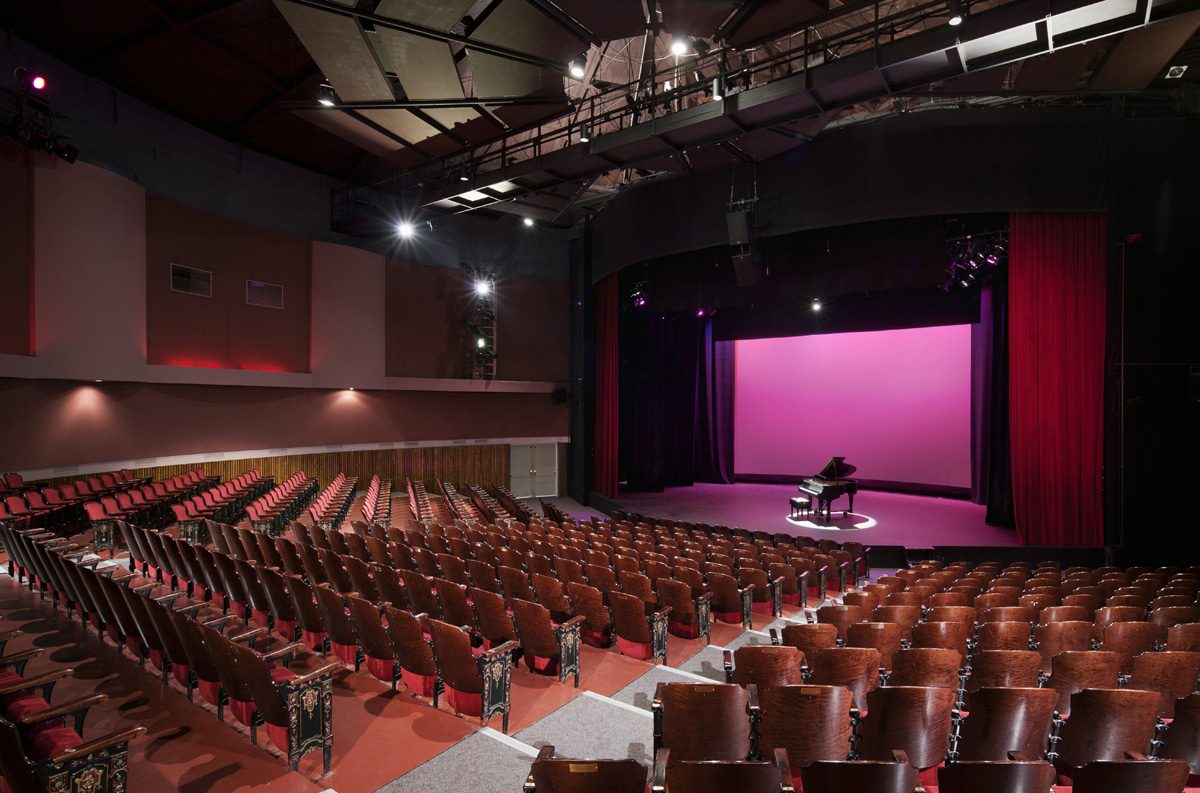
Queens Theatre is completely wheelchair accessible. All toilets and corridors in the building are adapted for wheelchairs, and there is an elevator in the main lobby. The actors’ dressing room and toilets are also wheelchair accessible. In addition, auxiliary devices are available for people with hearing impairments. Some performances are accompanied by subtitles. For the deaf-mute, there is sign language translation.
The Sensory-Friendly or Relaxed Performance program is designed for visitors with autism or other social, cognitive or physical disabilities. In this instance, the lighting is quite dull and the volume of sharp and loud sounds is lowered.
The AD service enhances show viewing for the blind and visually impaired by utilizing special listening devices and an audio description. The visitors’ headsets convey information regarding the entrances, exits and actions of the actors.
LOGO
The logo for Queens Theatre features basic shapes inspired by the pavilion’s geometric elements. A circle and rectangle form the letter “Q”. The colors represent many forms of performances: blue for dance, red for theater, yellow for comedy and green for family. Photos on the background are always black and white. Brochures and programs include one column of text, which is highlighted with black bars.

FEATURED IN A MOVIE
The exterior of the pavilion was featured in the 1978 musical adventure science fiction film “The Wiz”. The film retells the classic 1900 children’s story “The Wizard of Oz” with an African-American cast.
In addition, the final scene of the 1997 sci-fi comedy “Men in Black” was filmed here. The film is based on Marvel Comics and was recognized by critics as the best New York film of the 1990s, perfectly capturing the city’s spirit of the time. The timeless classic starring Will Smith and Tommy Lee Jones chronicles the adventures of a secret agency that monitors extraterrestrial activity on Earth. Secretly living on the planet, taking on a human form, many extraterrestrial refugees peacefully cohabit with the residents of the city. Federal Agents K and J watch aliens in New York and attempt to save the world.